Skip to content
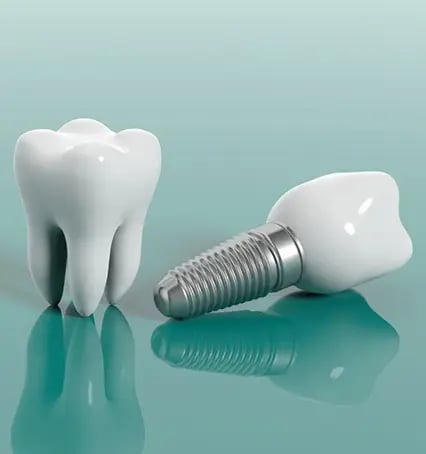
A dental implant with its crown next to a natural tooth

Dental Implants in Turkey

Dental clinics and dentists we work with. Prices per implant, a written plan before you travel.

from €265 per implant

Excellent4.7 on TrustpilotMoH licence AK-0945

Reply within 24h · no card · no obligation · Chat on WhatsApp

  • Trips2, about 3–4 months apart
  • Trip 1Typically 3–6 days
  • Trip 2Typically 5–9 days
What is a dental implant?

A dental implant is a titanium screw placed in the jawbone to replace a missing tooth's root; a crown, bridge or denture is fixed on top once the bone has healed. Most people need two trips about 3 to 4 months apart (longer with a bone graft or sinus lift). Results vary, and your dentist plans your treatment from your X-rays or CT scan.

Dental clinics and dentists we work with

See all

Find my dentist

Not sure who to choose? Get matched in 4 questions

First: where are you travelling from?

Why book through &NewMe

  • Verified clinics and dentistsA registered dental clinic, and the dentist's own record, checked on HealthTürkiye. How we verify
  • A written, itemised quote before you travelSet by the provider, with what is included. Patients do not pay &NewMe a fee.
  • A real coordinator, before, during and afterIf something goes wrong, we stand by you and help sort it out with the provider. You have the same rights as Turkish patients under the Patient Rights Regulation.

Licensed by the Turkish Ministry of Health (AK-0945)

Roughly how much does it cost?

From €265 per implant
"From" is the lowest listed price: one implant (Implant Swiss) at Klinik No.1. The crown on top is priced per tooth (from €100). 1 of the 9 implant providers on &NewMe publish a price; the others quote on request. Cards are ordered by our checks and our history with each clinic, not by price.
Get a free quote →

Typical full-treatment examples

Implant prices are per implant - this is what whole treatments add up to. Prices: Klinik No.1, listed on &NewMe in October 2026.

ExamplePrice
Single implant + crown1 implant €265 + 1 zirconia crown €100Example - your plan depends on your X-rays / CT scan€365
4 implants + 4 crowns4 × €265 + 4 × €100 (implants alone €1,060)Example - your plan depends on your X-rays / CT scan€1,460
All-on-4, one jawPackage price per jaw: 4 implants + fixed bridge; temporary teeth +€220Example - your plan depends on your X-rays / CT scan€3,115
20 veneers (Hollywood smile)20 × €210 e.max veneersExample - your plan depends on your X-rays / CT scan€4,200
20 zirconia crowns (smile makeover)Package price - crowns, not veneers (see "Turkey teeth" below)Example - your plan depends on your X-rays / CT scan€1,750

Examples only. Your dentist plans the number of implants, crowns or veneers, and any grafting, from your X-rays or CT scan - your written quote lists every item and its unit price before you travel. Flights and hotel are extra.

Usually included

  • The implant (Implant Swiss at the listed price) - priced per implant
  • Consultation, examination and a 3D panoramic X-ray
  • Local anaesthesia and a written treatment plan with unit prices
  • Implant certificate and a post-op check

Often extra - check your quote

  • The crown on each implant - priced per tooth
  • The abutment (connector) - varies by clinic, check your quote
  • A CT scan, if your dentist needs one
  • Temporary teeth, extractions, bone graft or sinus lift, if you need them
  • Sedation
  • Flights, hotel and transfers (2 trips)

Your implant timeline

Two visits to Turkey with healing at home in between. Typical; your clinic confirms your plan in writing.

  1. Visit 1 · typically 3–6 days

    Consultation and implant placement

    • Examination and consultation with your dentist
    • CT scan or X-rays to plan where each implant goes
    • Extractions, if any teeth need to come out
    • Implant placement, usually under local anaesthetic
    • Temporary teeth may or may not be included - check your quote

    If your in-clinic scan changes the plan, ask for the updated plan in writing before treatment starts.

  2. Healing at home · about 3–4 months

    The bone grows onto the implant

    • Usually around 3–4 months
    • 4–6 months or more if you need a bone graft or sinus lift
    • Follow your clinic's aftercare advice; tobacco can slow healing
  3. Visit 2 · typically 5–9 days

    Your final crowns or bridge

    • Abutments fitted on the healed implants
    • Final crowns or bridge made and tried in
    • Fit, bite and colour checks, then adjustments
  4. Aftercare at home · ongoing

    Look after them like natural teeth

    • Brush twice a day and clean around the implants with interdental brushes
    • Regular check-ups and hygiene visits with a dentist at home
    • Your &NewMe coordinator stays your contact if anything feels wrong

Visit lengths are what clinics on &NewMe typically plan; your own plan depends on your CT scan and your clinic confirms it in writing. Some people can have teeth fitted soon after placement (immediate loading) - only if the bone allows it, and your dentist decides. Healing times: the Oral Health Foundation says implants usually heal in around four months and the ADA says it can take up to several months; NHS hospital guidance usually leaves a bone graft 3 to 6 months to heal before implant treatment.

Sources: Oral Health Foundation - Dental implants; ADA MouthHealthy - Implants; NHS (Guy's and St Thomas') - Bone grafting for dental implants.

Questions to ask your dental clinic13 questions to check before you book
  1. Is my plan based on X-rays or a CT scan?

    A plan made from photos alone is an estimate. Ask for the X-rays (and a CT scan for implants) the plan is based on, and keep copies.

  2. What if the in-clinic scan changes the plan?

    If the plan changes after the in-clinic scan, get the new plan and price in writing and agree it before treatment starts. A CT scan can show bone a panoramic X-ray cannot, such as the need for a bone graft or sinus lift.

  3. Which teeth get which treatment, and why?

    Ask for a tooth-by-tooth plan: implant, crown, veneer, filling or extraction - and the reason for each one.

  4. Are any root canals planned? On which teeth, and why?

    Root canal treatment is for infection or damage inside a tooth. A healthy tooth should not be root-treated for cosmetic reasons - if the plan includes one, ask why.

  5. Which implant brand, and will I get an implant passport?

    Ask for the brand and model in writing, and the implant card or passport with the barcode stickers, so any dentist can identify the parts later.

  6. Is the abutment original - from the same maker as the implant?

    The abutment is the connector between the implant and the crown. Ask for its brand on the quote too.

  7. What are the crowns or veneers made of?

    Zirconia, e.max (glass-ceramic), porcelain or composite look, wear and cost differently. The material should be named on the quote.

  8. Will I have temporary teeth, and are they included?

    Ask whether temporary teeth are fixed or removable, how long you wear them, and whether they cost extra.

  9. What exactly is included in visit 2?

    Appointments, the final teeth, and - if the package includes them - hotel nights and transfers for the second trip as well as the first.

  10. Is the guarantee in writing?

    What it covers (implant, crown, veneer, the work itself), for how long, and any conditions such as check-ups. Only the written wording counts.

  11. What happens if something fails when I'm home?

    Who you contact, whether a local dentist can see you first, and who pays for corrective work and travel.

  12. What is the total cost, including extras?

    Grafts, sinus lift, extractions, root canals, temporary teeth, sedation and scans - with the unit price of every item.

  13. Who will treat me?

    The name of the dentist who will place the implants or prepare the teeth, and their registration.

Free, no obligation. Add the main points in the note - we'll ask you for the full quote by email or WhatsApp.

Based on the Oral Health Foundation's questions to ask before dental treatment abroad. Sources: Oral Health Foundation - Dental tourism; NHS - Root canal treatment; NHS (Guy's and St Thomas') - Dental cone beam CT scan.

What &NewMe does for you

A written plan before you fly
Unit prices for every implant, tooth and extra - no surprises in the chair
A coordinator on WhatsApp
Before, during and after both trips - in English
Clinics we have checked
Ministry of Health registration checked on HealthTürkiye before a clinic is verified

What a typical treatment looks like

Two trips, usually about 3 to 4 months apart (4 to 6 months or more with a bone graft or sinus lift). Typical; your clinic confirms your plan in writing.

  1. Free online assessment - send a panoramic X-ray if you have one (or photos) and get a written plan with unit prices
  2. Trip 1 (typically 3 to 6 days): examination, 3D X-ray or CT scan, any extractions, implants placed under local anaesthetic
  3. Home: about 3 to 4 months of healing (4 to 6+ with a bone graft or sinus lift) while the bone grows onto the implants (temporary teeth if needed)
  4. Trip 2 (typically 5 to 9 days): scans, final crowns or bridge made, fitted and checked
  5. Check-ups and hygiene visits at your own dentist at home

Is it right for me?

Am I a suitable candidate? →
A few questions about your health and goals - no commitment
Start check →

Before & after 5

from the provider

Videos 2

Photos and videos shared by providers. Individual results vary.

Is it safe - and is it legit?

Before you book any clinic through &NewMe, we check these things for you.

Licensed clinicsDental clinics registered with the Turkish Ministry of Health, checked on HealthTürkiye.
Written plan, unit pricesEvery implant, tooth and extra is priced in writing before you travel.
Materials namedYour plan names the implant system and crown material, with its certificate.
Licensed agency&NewMe is a health tourism agency licensed by the Turkish Ministry of Health (AK-0945).

Frequently asked questions

How much do dental implants cost in Turkey?

Listed implants on &NewMe start from €265 per implant (Klinik No.1, Implant Swiss). A single implant with a zirconia crown comes to about €365. Grafts, temporary teeth and other brands are extra. Dental implant cost guide

How many implants do I need?

It depends on how many teeth are missing and on your bone. One missing tooth usually needs one implant and a crown; neighbouring missing teeth can share implants, such as two implants holding a three-tooth bridge (ADA). A full jaw usually sits on 4 to 8 implants. Clinics on &NewMe typically offer a plan with more implants and one with fewer - your CT scan decides, and your clinic confirms it in writing.

Who is All-on-4 suitable for?

People who have lost, or are about to lose, all the teeth in one jaw and want fixed teeth instead of a denture. The two back implants are angled, which helps when there is too little bone at the back and can avoid a graft or sinus lift. With plenty of bone, ask whether more implants per jaw would suit you better. All-on-4 in Turkey

Why do I need two visits?

An implant must fuse with the bone before it can carry a final tooth - usually around four months (Oral Health Foundation). Visit 1 (typically 3 to 6 days) places the implants; visit 2 (typically 5 to 9 days), 3 to 4 months later - 4 to 6 or more with a bone graft or sinus lift - fits the final teeth. Typical times; your clinic confirms it in writing.

When do I need a bone graft or sinus lift?

When your CT scan shows too little bone to hold an implant - common where a tooth has been missing for years, because the jaw bone shrinks. In the upper back jaw, a sinus lift adds bone under the sinus floor. A graft is usually left 3 to 6 months to heal (NHS hospital guidance), so the gap between visits gets longer. If you need either, it goes into your written plan with its price.

Can I have implants if I smoke or have diabetes?

Often yes, but both raise the risk. Smoking slows healing and makes failure more likely - NHS hospital guidance strongly advises stopping. Diabetes can slow healing (ADA), so it should be well controlled. Tell the clinic about every condition and medicine, including bone-strengthening drugs, and check with your own doctor before you travel.

Which implant brand will I get, and what is an implant passport?

Ask for the implant brand and model - and the abutment, the connector on top - in writing before you book; prices vary a lot between brands. An implant passport (or card) records the brand, size and product stickers of each implant, so any dentist can identify the parts later. Clinics on &NewMe typically give one - ask for yours before you fly home. Why dental quotes differ

What if an implant fails after I get home?

It is uncommon. An implant may not fuse, or may loosen years later from gum disease around it - good cleaning helps prevent this (Oral Health Foundation). Send your coordinator photos and X-rays; the clinic advises whether it can wait or needs a dentist at home. Before you book, get in writing what the guarantee covers, for how long, and who pays travel for repairs.

Do implants hurt?

They are placed under local anaesthetic, so you should not feel pain during the procedure. Soreness and swelling for a few days afterwards are normal.

Will I be without teeth between the trips?

Not necessarily - temporary teeth can be made (Klinik No.1: €220 per jaw), but they may or may not be included in a quote, so check yours. Removable ones can feel loose as your gums heal and may need adjusting. For a single back tooth, many people simply wait. Ask for temporary teeth in your plan if a gap would show.

Related treatments

Missing a whole arch, or need to cap a damaged tooth? These may fit better.

Dental implants: what to expect

Short answers to the questions we hear most. Your dentist will advise on your own case.

What is a dental implant?

A dental implant is a small titanium screw placed in the jawbone where a tooth is missing. Once the bone has healed around it, it holds a crown, a bridge or a denture. It replaces the root, so the new tooth does not rest on the teeth next to it. In the UK, implants are usually only available privately (NHS).

Sources: Oral Health Foundation - Dental implants; NHS - Dental treatments.

Implant, abutment and crown: what are you paying for?

A finished implant tooth has three parts: the implant (the screw in the bone), the abutment (the connector) and the crown (the visible tooth). Clinics price them differently - some quote "per implant" for the screw only, others for the whole tooth. On &NewMe the Klinik No.1 price of €265 is per implant (Implant Swiss); the zirconia crown on top is priced per tooth (€100). Whether the abutment is included varies by clinic - check your quote.

Sources: Oral Health Foundation - Dental implants.

Why two trips? The implant timeline

A standard implant needs two trips:

  • Trip 1 (typically 3 to 6 days): examination, 3D X-ray or CT scan, any extractions, and the implants are placed under local anaesthetic. Temporary teeth may or may not be included - check your quote.
  • Healing (usually about 3 to 4 months; 4 to 6 months or more with a bone graft or sinus lift): the bone grows onto the implant. The Oral Health Foundation says this usually takes around four months and the ADA says it can take up to several months; NHS hospital guidance usually leaves a bone graft 3 to 6 months to heal before implant treatment.
  • Trip 2 (typically 5 to 9 days): scans, then the final crowns, bridge or denture are made and fitted.

Clinics on &NewMe typically plan a first visit of 3 to 6 days and a second visit of 5 to 9 days - typical times; your clinic confirms your plan in writing. Some people can have implants and teeth fitted in one visit ("immediate loading") - only if the bone and bite allow it; your dentist decides.

Sources: Oral Health Foundation - Dental implants; ADA MouthHealthy - Implants; NHS (Guy's and St Thomas') - Bone grafting for dental implants.

Bone graft and sinus lift

An implant needs enough healthy bone. After a tooth has been missing for a while, the bone can shrink. A CT scan shows how much there is. If there is too little, the dentist may add bone (a bone graft, sometimes with a membrane) or, in the upper back jaw, lift the sinus floor (sinus lift). Both add cost, and they can add months of healing before the implant or the crown. They are only added to your plan if your scan shows you need them. At Klinik No.1: bone graft €190, membrane €190, sinus lift €370.

Sources: ADA MouthHealthy - Implants; NHS (Guy's and St Thomas') - Bone grafting for dental implants.

Who are implants for?

  • One or more missing teeth, or teeth that cannot be saved
  • Healthy gums - gum disease is treated first
  • Enough bone, or willing to have it built up
  • A bite and general health your dentist is happy with

Long-term illnesses such as diabetes can interfere with healing, and tobacco slows healing (ADA). Tell the clinic about every medicine you take, especially blood thinners and bone medicines.

Sources: ADA MouthHealthy - Implants; NHS (Guy's and St Thomas') - Bone grafting for dental implants.

Implant brands

Clinics use different implant systems. The Klinik No.1 "from" price is for Implant Swiss; other brands cost more per implant: Medigma €290, Bego €360, Medentika €410, DXL €440, Nobel Biocare €570, Straumann €690. A well-known brand can make later repairs easier, because dentists at home are more likely to have the parts. Ask for the brand and the implant certificate in writing.

What is the crown made of?

Crowns on implants are usually zirconia (strong, good for back teeth), e.max or porcelain (very natural at the front) or porcelain fused to metal. At Klinik No.1 the listed crown is monolithic zirconia (€100 per tooth); a screw-retained crown, which the dentist can unscrew for repairs, adds €30. Dental crowns

Sources: Oral Health Foundation - Crowns.

Missing most of your teeth? All-on-4 and All-on-6

If most teeth in a jaw are missing or failing, a fixed bridge on 4 or 6 implants is often simpler than many single implants. All-on-4 is listed from €3,115 per jaw, All-on-6 from €3,640 per jaw. All-on-4 in Turkey

Recovery after implant surgery

The implants are placed under local anaesthetic, with sedation if you prefer. Swelling and soreness for a few days are common. Your dentist may recommend soft, cold foods and warm soup while you heal (ADA). Avoid smoking, which slows healing. Most people go back to a desk job within a few days.

Sources: ADA MouthHealthy - Implants; NHS (Guy's and St Thomas') - Bone grafting for dental implants.

When can I fly home?

Usually at the end of your first visit (typically 3 to 6 days), a few days after the implants are placed, once the clinic has checked you - longer if you have temporary teeth fitted or several extractions. Ask your clinic how many days to stay before you book flights. Take your aftercare instructions and medicines in your hand luggage.

Looking after implants at home

The Oral Health Foundation advises brushing for two minutes last thing at night and at least once more during the day, cleaning around the implant every day with interdental brushes, and keeping regular dental and hygiene appointments. There is no lifetime guarantee, but implants that are well cared for often last a very long time.

Sources: Oral Health Foundation - Dental implants.

If something isn't right after you're home

  • Your &NewMe coordinator stays with you after you fly home - send photos and a description first; the clinic reviews them and tells you whether it can wait for your next visit.
  • Keep a dentist at home for check-ups and hygiene visits. A loose crown or a chipped veneer can often be checked locally first.
  • Ask before you book what follow-up is included and what happens if work has to be corrected - the Oral Health Foundation lists this among the key questions, because corrections at home can be expensive.

For swelling that gets worse, a fever, pus or severe pain, see a dentist or doctor at home straight away, then tell your coordinator.

Sources: Oral Health Foundation - Dental tourism; British Dental Association - dental tourism survey (2022).

What are the risks?

As with any surgery: pain, swelling, bleeding and infection. An implant can fail to fuse with the bone and need replacing. In the lower jaw there is a small risk to the nerve (numbness of the lip or chin); in the upper jaw, sinus problems. Over the years, gum inflammation around an implant can develop if cleaning is poor. The Oral Health Foundation lists failed implants, infection, ill-fitting work and difficult follow-up care among the risks of treatment abroad; in the BDA's 2022 survey implants were the second most common treatment needing follow-up work.

Sources: Oral Health Foundation - Dental tourism; British Dental Association - dental tourism survey (2022); ADA MouthHealthy - Implants; NHS (Guy's and St Thomas') - Bone grafting for dental implants.

Guarantees

Some clinics offer a guarantee on implants, crowns or veneers. It is set by the clinic, not by &NewMe, and the terms differ: what is covered, for how long, whether you must return for check-ups, and who pays for flights if something has to be redone. No guarantee is listed with the prices on this page - if a clinic offers one, it is written in your quote, and only that wording counts. The Oral Health Foundation suggests asking these questions before you book.

Sources: Oral Health Foundation - Dental tourism.

How do I choose a dental clinic or dentist?

  • A clinic registered with the Turkish Ministry of Health - for international patients you can check it on HealthTürkiye, the Ministry's portal. On &NewMe the Verified by &NewMe badge only appears when we have checked that registration (and, for a named dentist, their own HealthTürkiye record).
  • A named dentist for your treatment, and who places the implants.
  • A written plan with every item and unit price: implant brand, abutment, crown material, grafts, temporary teeth, the number of trips.
  • Before-and-after photos of similar cases, and reviews on independent sites.

Many dental clinics work as a team - the clinic is the provider and names the dentist in your plan. How we verify

Sources: Oral Health Foundation - Dental tourism; British Dental Association - dental tourism survey (2022).

Get your free offers

Loading form…

WhatsApp